
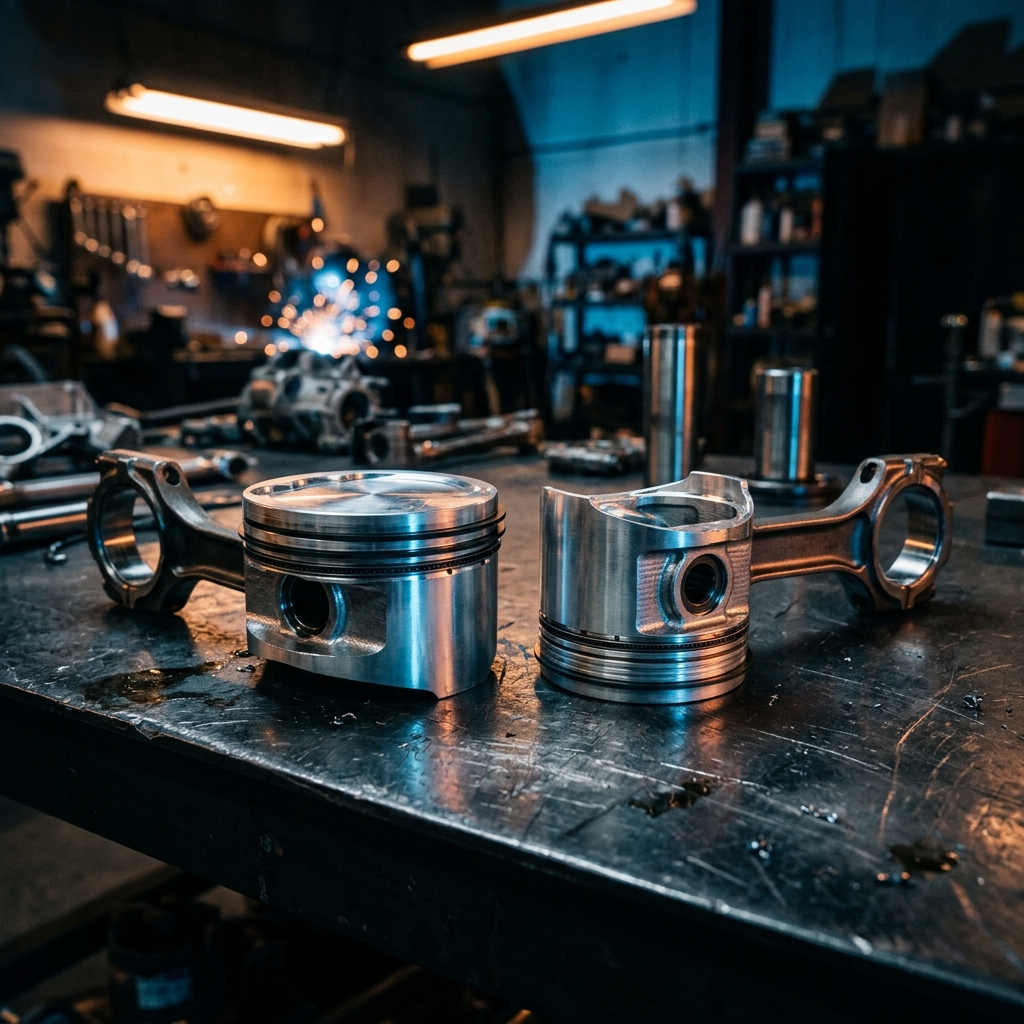
When a motorcycle is described as a “600” or a “1000,” the number refers to its engine displacement in cubic centimeters (cc). A Yamaha YZF-R6 is a 599cc motorcycle. A Kawasaki ZX-10R is a 998cc motorcycle. A Honda Gold Wing is a 1,833cc motorcycle.
These numbers describe the total swept volume of the engine — how much air and fuel it processes per crankshaft cycle. Understanding what cc means, how it translates to performance, and why a 600cc sportbike can outrun a 1,800cc cruiser gives you the framework to interpret every motorcycle specification sheet.
What CC Actually Measures
CC is calculated identically to automobile displacement:
Displacement (cc) = (π ÷ 4) × Bore² × Stroke × Cylinders
The only difference from car engines is scale — motorcycle bores are typically 50–100 mm (vs. 80–110 mm for cars) and strokes are 40–70 mm (vs. 75–100 mm for cars).
Example Calculations
| Motorcycle | Bore | Stroke | Cylinders | Calculated CC |
|---|---|---|---|---|
| Kawasaki Ninja 400 | 70.0 mm | 51.8 mm | 2 | 399 cc |
| Yamaha YZF-R6 | 67.0 mm | 42.5 mm | 4 | 599 cc |
| Kawasaki ZX-10R | 76.0 mm | 55.0 mm | 4 | 998 cc |
| Ducati Panigale V4 | 81.0 mm | 53.5 mm | 4 | 1,103 cc |
| Harley-Davidson Milwaukee-Eight | 100.0 mm | 114.3 mm | 2 | 1,795 cc |
| Honda Gold Wing | 73.0 mm | 73.0 mm | 6 | 1,833 cc |
Notice the enormous variation in bore-to-stroke ratios. The Yamaha R6 is extremely oversquare (67 mm bore, 42.5 mm stroke) for high-RPM power. The Harley-Davidson is extremely undersquare (100 mm bore, 114.3 mm stroke) for low-RPM torque. Both are valid designs — they just optimize for different riding experiences.
Use the engine displacement calculator to verify any motorcycle’s cc from its bore and stroke specifications.
The 6 Motorcycle Displacement Classes
Sub-300cc: Learner and Commuter
| Typical Engines | 125cc single, 250cc single/twin, 300cc twin |
|---|---|
| Power range | 10–40 hp |
| Weight range | 250–400 lb |
| Character | Lightweight, fuel-efficient, forgiving |
| Licensing | Learner-permit eligible in most jurisdictions |
These motorcycles prioritize fuel economy (70–100+ mpg), low insurance cost, and approachability. A 300cc twin produces approximately 30–40 hp — adequate for city riding and light highway use.
300–500cc: Intermediate
| Typical Engines | 400cc twin, 500cc twin/triple |
|---|---|
| Power range | 35–55 hp |
| Weight range | 370–440 lb |
| Character | Capable commuter, light sport riding |
| Best for | New riders ready for highway speeds |
This class is increasingly popular in global markets. The Kawasaki Ninja 400 (399cc, 49 hp) and Honda CB500F (471cc, 47 hp) offer genuine sport-riding capability without the insurance and licensing penalties of larger machines.
600–700cc: Supersport and Middleweight
| Typical Engines | 600cc inline-4, 650cc twin |
|---|---|
| Power range | 65–120 hp |
| Weight range | 400–470 lb |
| Character | High-RPM screamers (I4) or torquey all-rounders (twin) |
| Best for | Experienced riders, track days, sport touring |
The 600cc supersport class is one of the most competitive in motorcycle racing. A Yamaha R6 produces 120 hp at 14,500 RPM from 599cc — that is 200 hp per liter, achievable because the engine revs to 16,000+ RPM. Compare that to a typical car engine producing 100–130 hp per liter.
800–1,000cc: Superbike and Large Middleweight
| Typical Engines | 1,000cc inline-4, 900cc triple, 800cc twin |
|---|---|
| Power range | 100–210 hp |
| Weight range | 430–510 lb |
| Character | Serious performance, very fast |
| Best for | Experienced riders, track racing |
The “liter bike” class (1,000cc inline-4) represents the pinnacle of motorcycle performance engineering. A Kawasaki ZX-10R produces 203 hp from 998cc — more power-to-weight than most supercars at a fraction of the price.
1,000–1,400cc: Sport Touring and Large Naked
| Typical Engines | 1,200cc twin/triple, 1,300cc inline-4 |
|---|---|
| Power range | 100–190 hp |
| Weight range | 470–600 lb |
| Character | Strong midrange torque, comfortable for distance |
| Best for | Long-distance riding, canyon carving |
Larger displacement in this class trades peak RPM for midrange torque. A BMW R1250GS (1,254cc boxer twin) produces 136 hp with strong torque below 6,000 RPM — ideal for loaded touring with a passenger and luggage.
1,400cc+: Cruiser, Touring, and Mega-Displacement
| Typical Engines | 1,800cc V-twin, 2,500cc inline-6 |
|---|---|
| Power range | 80–170 hp |
| Weight range | 600–950 lb |
| Character | Massive low-RPM torque, highway comfort |
| Best for | Highway cruising, touring, relaxed riding |
Harley-Davidson’s Milwaukee-Eight 114 (1,868cc) produces 94 hp but 119 ft-lb of torque at just 3,500 RPM. The Triumph Rocket 3 displaces 2,458cc from a triple — the largest production motorcycle engine ever built.
Why CC Does Not Equal Speed
A 599cc Yamaha R6 is faster than a 1,868cc Harley-Davidson Road King in every measurable performance metric:
| Metric | R6 (599cc) | Road King (1,868cc) |
|---|---|---|
| Horsepower | 120 hp | 94 hp |
| Weight | 419 lb | 800 lb |
| Power-to-weight | 0.286 hp/lb | 0.118 hp/lb |
| 0–60 mph | ~3.2 sec | ~5.0 sec |
| Quarter mile | ~10.8 sec | ~13.2 sec |
| Top speed | 165 mph | 110 mph |
The R6 has 2.4× better power-to-weight despite having 1/3 the displacement. This is possible because:
- RPM: The R6 peaks at 14,500 RPM. The Harley peaks at 5,500 RPM. More power strokes per minute = more power from less displacement.
- Weight: The R6 weighs half as much. Less mass to accelerate = faster acceleration.
- Aerodynamics: Full-fairing sportbike vs. upright cruiser. Lower drag = higher top speed.
- Gearing: Close-ratio 6-speed vs. wide-ratio 6-speed. Keeps the engine in its powerband.
Motorcycle CC vs. Car Displacement
| Metric | 1,000cc Superbike | 1,000cc Car Engine |
|---|---|---|
| Typical power | 200 hp | 65 hp |
| Typical RPM range | 4,000–16,000 | 1,000–6,000 |
| HP per liter | 200 | 65 |
| Vehicle weight | 440 lb | 2,500 lb |
| Power-to-weight (vehicle) | 0.45 hp/lb | 0.026 hp/lb |
Motorcycles extract 2–3× more horsepower per cc than cars primarily because they rev 2–3× higher. Each additional RPM increment adds more power strokes per minute, and motorcycle engines are engineered with the lightweight, high-RPM components (titanium valves, short strokes, high compression) to sustain those speeds.
How to Convert Motorcycle CC to Other Units
| From | To | Formula | Example |
|---|---|---|---|
| cc → Liters | ÷ 1,000 | 599 cc = 0.599 L | |
| cc → Cubic inches | ÷ 16.387 | 599 cc = 36.6 CID | |
| Liters → cc | × 1,000 | 1.0 L = 1,000 cc | |
| CID → cc | × 16.387 | 61 CID = 999.5 cc |
Use the displacement converter for instant conversions between all units.
Choosing the Right CC for You
| Rider Type | Recommended CC | Why |
|---|---|---|
| Complete beginner | 250–400cc | Forgiving power, low weight, affordable |
| Commuter | 300–650cc | Fuel-efficient, highway-capable |
| Sport rider | 600–1,000cc | Track-capable, thrilling performance |
| Touring rider | 1,000–1,800cc | Comfort, luggage capacity, cruise torque |
| Cruiser enthusiast | 900–2,500cc | Torque feel, sound, heritage |
The “right” cc is not the biggest number — it is the number that matches your riding style, experience, and intended use. A well-matched 650cc twin can provide more riding enjoyment than an overwhelming 1,000cc superbike that the rider cannot fully exploit.