
Every gallon of gasoline burned produces approximately 19.6 pounds of CO2. This number does not change with engine technology, combustion efficiency, or emissions controls — it is a chemical constant. A larger engine that burns more fuel per mile produces proportionally more CO2 per mile, regardless of how advanced its engineering is.
This is the fundamental environmental tension of displacement: larger engines provide more power, more torque, and more capability, but they consume more fuel at any given operating point. Understanding where that penalty comes from — and what technologies reduce it — helps builders, enthusiasts, and buyers make informed decisions.
Why Larger Engines Burn More Fuel
1. Greater Pumping Losses at Part Throttle
At highway cruise, most engines operate at 10–20% of their maximum output. The throttle plate is barely open, creating a restriction that the pistons must pull against on every intake stroke.
A larger engine has more cylinders pulling against that restriction, consuming more energy to pump air:
| Engine | Displacement | Cylinders | Pumping Loss at Cruise |
|---|---|---|---|
| 1.5L I4 | 1,498 cc | 4 | 0.8 hp |
| 2.0L I4 | 1,998 cc | 4 | 1.1 hp |
| 3.5L V6 | 3,456 cc | 6 | 2.2 hp |
| 5.0L V8 | 4,951 cc | 8 | 3.5 hp |
| 6.2L V8 | 6,162 cc | 8 | 4.3 hp |
The 6.2L V8 wastes 5.4x more energy on pumping than the 1.5L I4 at the same cruise speed. This energy comes directly from fuel that produces no useful work.
2. Greater Internal Friction
More cylinders, more bearings, more piston rings, and more valve train components all contribute to mechanical friction:
| Engine | Friction Horsepower (@ 2,500 RPM) | % of Cruise Power |
|---|---|---|
| 1.5L I4 | 4 hp | 16% |
| 2.5L I4 | 6 hp | 24% |
| 3.5L V6 | 9 hp | 36% |
| 5.0L V8 | 14 hp | 56% |
| 6.2L V8 | 17 hp | 68% |
At cruise, the 6.2L V8 spends 68% of its output just overcoming internal friction. The 1.5L spends 16%. This is a direct function of the number and size of moving parts — which scale with displacement.
3. Greater Thermal Mass
Larger engines have more metal to heat during warm-up. A cold 6.2L V8 takes longer to reach operating temperature than a 1.5L I4, burning richer (more fuel) during the warm-up period. In short-trip urban driving, the warm-up penalty dominates fuel consumption.
Real-World Fuel Consumption by Displacement
| Vehicle | Engine | Highway MPG | CO2 (g/mile) | Annual CO2 (12,000 mi) |
|---|---|---|---|---|
| Honda Civic | 1.5L Turbo I4 | 40 | 222 | 2,664 lb |
| Toyota Camry | 2.5L NA I4 | 34 | 261 | 3,132 lb |
| Honda Accord | 2.0L Turbo I4 | 34 | 261 | 3,132 lb |
| Ford Mustang | 2.3L Turbo I4 | 31 | 286 | 3,432 lb |
| Ford Mustang GT | 5.0L NA V8 | 25 | 355 | 4,260 lb |
| Chevy Camaro ZL1 | 6.2L SC V8 | 20 | 444 | 5,328 lb |
| RAM 1500 | 5.7L NA V8 | 22 | 404 | 4,848 lb |
The Civic produces half the CO2 of the Camaro ZL1 while carrying comparable passenger capacity. The 3,300-mile-per-year difference in CO2 output compounds over a vehicle’s lifetime.
How Regulators Address Displacement
European Displacement Tax Brackets
Many European and Asian countries use displacement-based vehicle taxation:
| Country | Tax Bracket Thresholds | Annual Tax Difference |
|---|---|---|
| Germany | CO2-based (indirect displacement correlation) | Varies by g/km |
| Japan | Under 660cc (kei car), 661–2,000cc, over 2,000cc | 7,500–58,000 yen |
| Italy | Per kW, with displacement surcharges over 2.0L | Up to 700 EUR/year |
| China | Under 1.0L, 1.0–1.6L, 1.6–2.5L, over 2.5L | 1–40% purchase tax |
| South Korea | Under 1,000cc, 1,000–1,600cc, over 1,600cc | 5–10% tax differential |
Japan’s kei car regulations (maximum 660cc) have created an entire market segment of ultra-efficient miniaturized vehicles — a direct response to displacement-based taxation.
US CAFE Standards
The US does not tax displacement directly. Instead, Corporate Average Fuel Economy (CAFE) standards require manufacturers to achieve fleet-average fuel economy targets. This indirectly penalizes large displacement because larger engines lower the fleet average, forcing manufacturers to sell more small-engine vehicles to compensate.
Technologies That Reduce the Displacement Penalty
| Technology | Fuel Savings | How It Works |
|---|---|---|
| Cylinder deactivation | 5–15% | Shuts down half the cylinders at cruise |
| Direct injection | 3–5% | More precise fuel delivery, reduces wall wetting |
| Variable valve timing | 2–5% | Optimizes valve events for each operating condition |
| Start-stop | 3–8% | Shuts off engine at idle (city driving) |
| Turbo downsizing | 15–25% | Replaces large NA with smaller turbo of equal power |
| Atkinson cycle / Miller cycle | 5–10% | Extended expansion ratio improves thermal efficiency |
| 48V mild hybrid | 10–15% | Electric assist during acceleration, energy recovery |
These technologies can reduce a 6.2L V8’s fuel consumption by 30–40% compared to a 2010-era equivalent — but the same technologies applied to a 2.0L I4 produce an even more efficient result. The displacement penalty shrinks but never reaches zero.
The CO2 Equation: Why It Cannot Be Engineered Away
CO2 emissions are directly proportional to fuel burned:
CO2 (grams) = Fuel (gallons) x 8,887
No catalytic converter, no emissions control system, and no combustion optimization can reduce CO2 per gallon burned. The only ways to reduce CO2 are:
- Burn less fuel (smaller engine, lighter vehicle, better aero)
- Use fuel with less carbon (E85, hydrogen, biofuels)
- Use no fuel (electric drivetrain)
This is fundamentally different from regulated pollutants (NOx, CO, HC), which can be reduced 95%+ through catalytic conversion. CO2 is the inevitable product of hydrocarbon combustion.
The Displacement-Emissions Trade-Off for Builders
| Build Priority | Displacement Strategy | Environmental Impact |
|---|---|---|
| Maximum torque (towing) | Largest available | Highest fuel consumption, highest CO2 |
| Street performance | Match displacement to weight | Moderate — avoid oversizing |
| Track day / autocross | Smaller engine, lighter chassis | Lower — less fuel consumed |
| Daily driver | Smallest engine meeting power needs | Lowest for ICE |
| Fuel economy target | Turbo downsizing | Best ICE option |
| Zero emissions | Electric swap | No tailpipe emissions |
The Bigger Picture
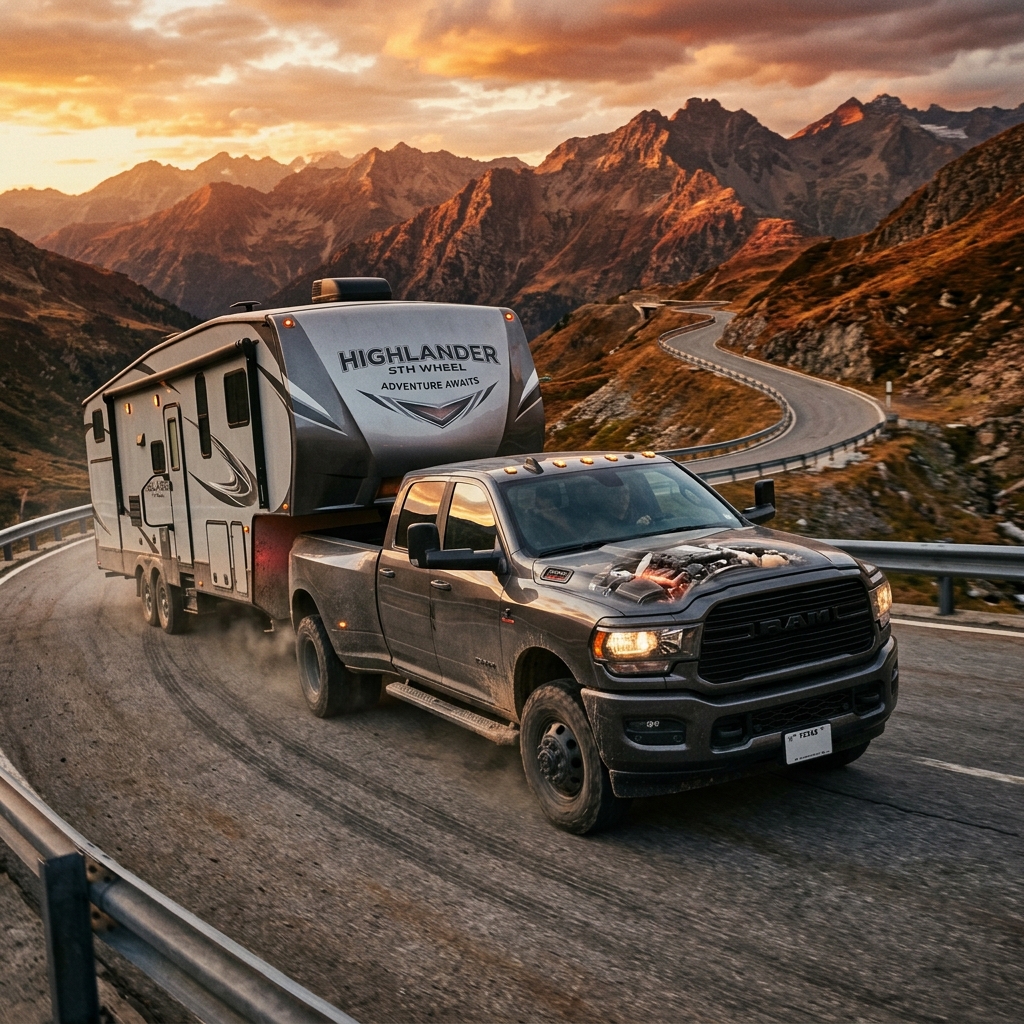
Displacement is not inherently bad for the environment — it is a tool. A 6.2L V8 in a work truck towing 10,000 lb is operating at a reasonable load point. The same engine in a 3,500 lb sports car driven at 30% throttle on surface streets is operating at 6% of its capacity, wasting energy on friction and pumping losses.
The environmental impact of displacement depends on how much of the engine’s capacity is actually used. Matching displacement to the job — rather than defaulting to the largest available — is the most effective strategy for any builder who considers fuel consumption part of the build equation.
Calculate your engine’s displacement with the calculator, then use the fuel economy context to decide whether the combination matches the intended use.